

By Stuti Mankodi
Originally trained as a mineralogist and petrologist, Professor Reto Gieré’s work today spans renewable energy, waste-to-energy systems, biomass combustion, environmental mineralogy, and climate change. Through both his research and teaching, he explores how energy systems, waste, and sustainability are deeply interconnected — and why circular economy thinking will be critical for the future of renewable energy. We spoke with Professor Gieré about his research journey, renewable energy systems, and the lessons he hopes students take away from his courses.

Professor Reto Gieré
Your work spans multiple areas of energy and environmental systems — could you share an overview of your research and how it connects to renewable energy?
A major part of my work focuses on biomass combustion, as well as climate change and reforestation related to charcoal. Those are probably the areas of my research most directly connected to renewable energy.
I’m especially interested in the energy we produce, but more importantly in what happens to the residues that accumulate. There’s so much valuable material left in combustion ash and industrial waste that we should not simply discard it.
In many modern waste-to-energy systems, companies are now recovering valuable materials from these residues. In fact, some facilities make more money from selling processed residues than from selling the energy itself.
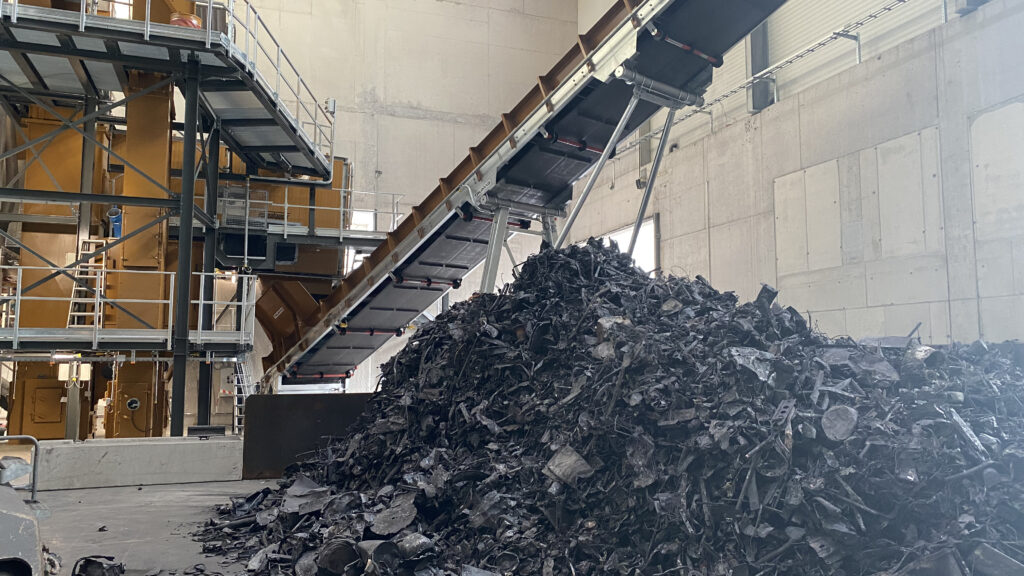
The KEZO waste-to-energy plant in Hinwil, Switzerland (Courtesy: Reto Gieré)
What initially drew you to studying energy, waste, and environmental systems, and how have your interests evolved over time?
I’m originally a mineralogist and petrologist. My early work focused on minerals that were highly promising for nuclear waste disposal.
Later, while I was at Purdue University, one of my students became interested in air pollution from coal combustion. At the time, I knew almost nothing about air pollution, but once we started working together, I became deeply interested in the field.
That eventually led me into research on coal combustion, industrial emissions, waste materials, and later biomass combustion and renewable energy systems. I became passionate about how waste materials can be reused in products like cement and other industrial applications.
From your perspective, what are the most promising or impactful forms of renewable energy today, and why?
Every renewable energy technology comes with its own challenges. Wind turbines, solar panels, and other systems all eventually create waste, and as long as we continue sending those materials to landfills at the end of their life cycles, that remains a major problem.
We need to build renewable energy infrastructure with recycling and material recovery in mind from the very beginning.
Geothermal energy is one area that I believe has a very important future. I also think there is enormous opportunity in recovering valuable materials from electronic waste and renewable energy infrastructure.
Recycling these materials is not only environmentally essential — it is also economically profitable.
How do you approach the interconnected challenges of energy, waste, and environmental sustainability in your research or teaching?
I often bring examples from my own research directly into the classroom because I want students to see how interconnected these systems really are.
For example, when biomass is burned, the organic material is transformed mostly into CO2, which is emitted into the atmosphere, but the inorganic components remain behind in the ash. Understanding those materials allows us to figure out how they can be reused.
A large part of my work has focused on studying how biomass ash can be incorporated into cement manufacturing and other industrial systems. I also collaborate with large companies like Holcim to explore how industries can reduce their environmental impact while remaining economically viable.
One of the main things I try to emphasize to students is that sustainability has to become central to how industries operate in the future.

Mortar made with biomass ash (Courtesy of Reto Gieré)
What are some key insights or lessons you hope students take away from your course “Energy, Waste, and the Environment”?
One of the most important ideas I want students to take away is that waste is not simply something we throw away. There is no such thing as waste — there are still materials and precious resources within those systems that can often be reused.
I want students to start thinking more critically about circular economy systems and the possibilities within material recovery and reuse.
Through programs with the Lauder Institute at The Wharton School, I also take students to Switzerland to study sustainability systems firsthand. Seeing retreating glaciers in person often has a major impact on how students understand climate change and sustainability. It becomes much more real to them.
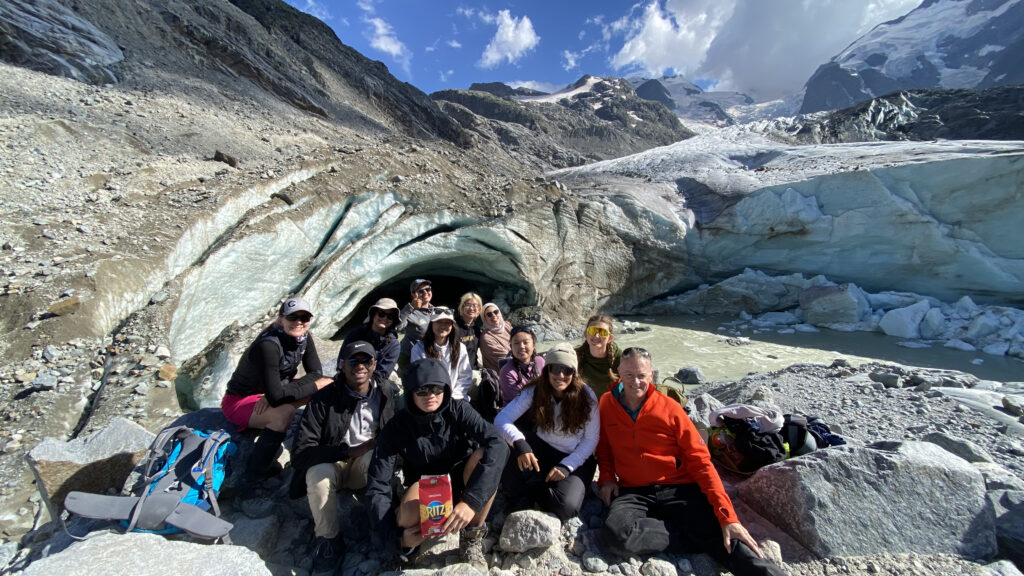
Professor Reto Giere with one of his classes at Penn in the Morteratsch Glacier in the Swiss Alps (Courtesy of Reto Giere)
Looking ahead, what do you see as the biggest challenges and opportunities in transitioning to more sustainable energy systems?
One of the biggest challenges is changing our mindset. Many people still think of waste as something disposable, rather than as a resource that still contains value.
At the same time, that creates enormous opportunities. We could recover valuable materials from waste streams, improve recycling systems, reduce pollution, and generate significant economic value in the process.
Agricultural waste, food waste, and electronic waste are all areas where there is huge potential for innovation and improvement.
Ultimately, transitioning to more sustainable energy systems will require better technologies, collective responsibility, creativity, and a willingness to rethink how we use resources.
Professor Gieré teaches the following classes at the University of Pennsylvania:
- EESC 1000 – Earth Systems Science
- EESC 2120 – Earth Materials
- EESC 3003 – Penn in the Alps
- EESC 4200/6200 – Geochemistry
- ENVS 6840 – Energy, Waste, and the Environment
- INTS 9910 International Studies – Masters Research
- INTS 7410 International Studies – Lauder Intercultural Venture (LIV)
Stuti Mankodi is a Penn Climate student assistant who graduated from Penn’s MES program in May 2026.